

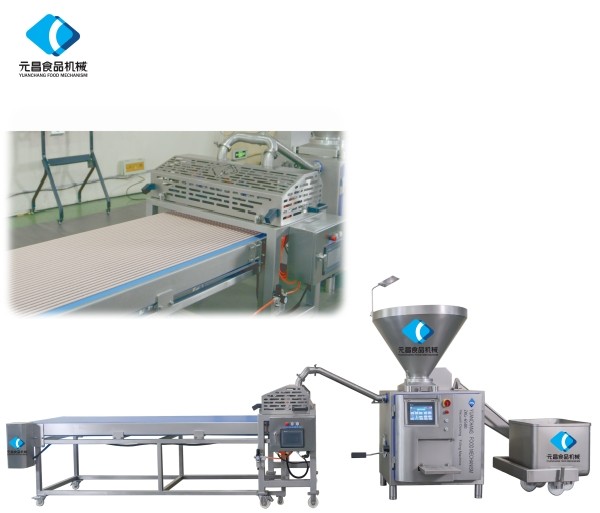
Multi-Lane Forming System — High-Efficiency Filling and Extrusion Forming Equipment for Meat Products
Filling and Flexible Extrusion Forming Equipment for Meat Products
I. Industry Process Overview
The filling and forming process of meat fillings is a crucial link connecting raw materials with final products, directly determining the final quality, texture, appearance, and market competitiveness of the product. In the industrial production of traditional ready-to-eat snack meat products, processing equipment must meet the requirements for high precision, high consistency, and high stability under mass continuous production conditions. Among these, the filling and forming system has become an indispensable core component of modern meat processing lines due to its advantages in stable conveying capacity and precise portion control.
In the modern meat processing sector, filling and forming technology not only drives equipment iteration and innovation but also serves as an important benchmark for measuring the technical strength of equipment manufacturers. Sausage-type meat products have long dominated the mainstream market for deep-processed foods; however, in recent years, ready-to-eat "casing-free" meat products have provided food enterprises with a clear differentiated competitive advantage through their rich shapes, diverse flavours, and consumption convenience. The original design intention of forming equipment is not only to achieve diverse shape moulding but also to strictly control the uniformity of product size and weight, helping production enterprises meet stringent commercial production standards.
At present, filling and forming technology has long surpassed mere shape-moulding functions. Stable and mature forming processes can effectively improve raw material utilisation, maintain batch quality uniformity, and guarantee the continuity of large-scale production. A scientifically sound filling and forming workflow can utilise the raw material filling process to ensure consistent texture, elasticity, and colour across every batch, laying a solid foundation for enterprises to stably expand production and implement standardised manufacturing.
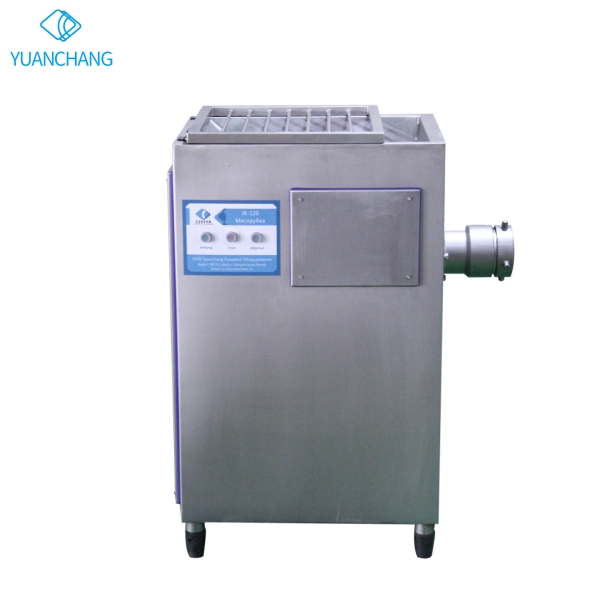
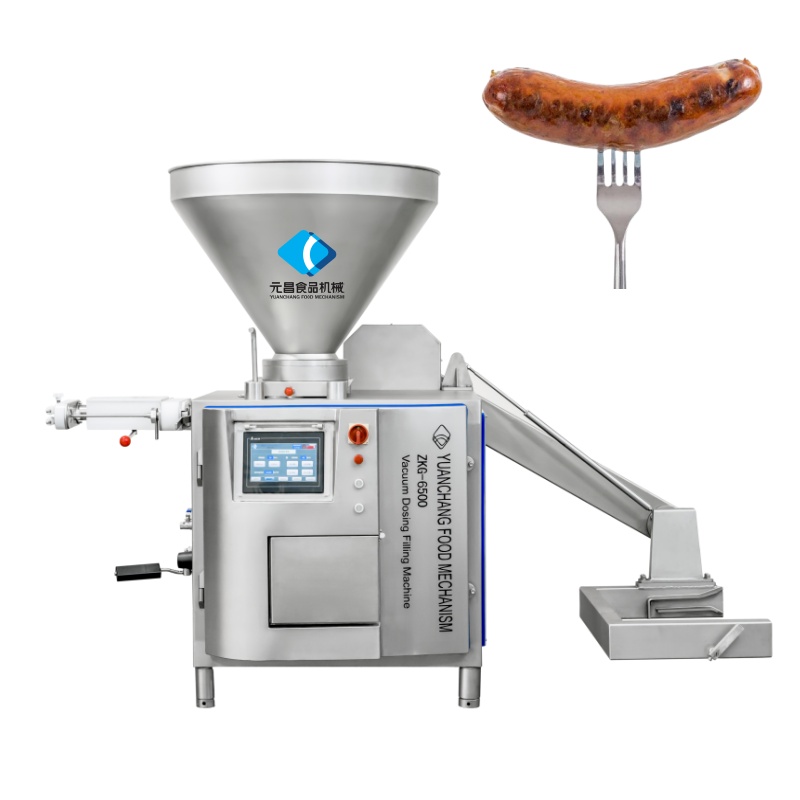
In the layout of automated production lines, the integration of auxiliary forming equipment is particularly prominent. Meat Fillers are responsible for the pressure stabilisation, homogenisation, and quantitative conveying of bulk fillings, providing a stable material supply for downstream forming processes. Whether working in tandem with vacuum sausage stuffers or integrated into dedicated forming production lines, seamlessly connected filling systems can reduce manual intervention, maintain a continuous and smooth production flow, and align with modern factories' dual demands for production efficiency and cost optimisation.

II. Product Introduction
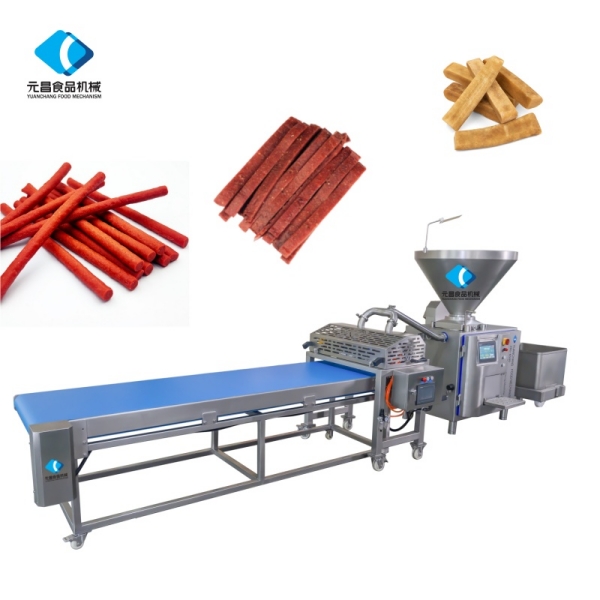
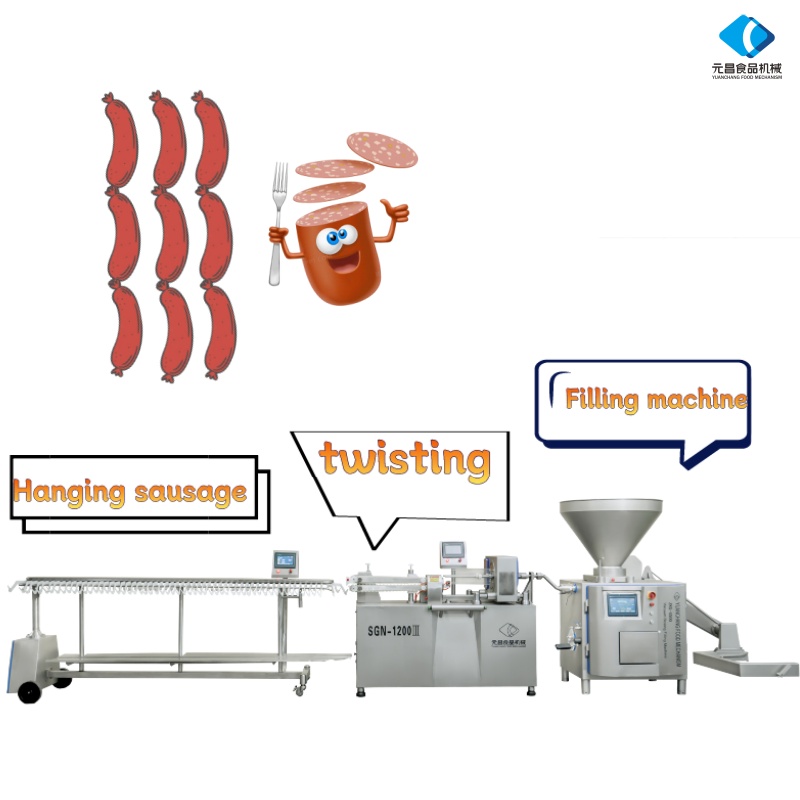
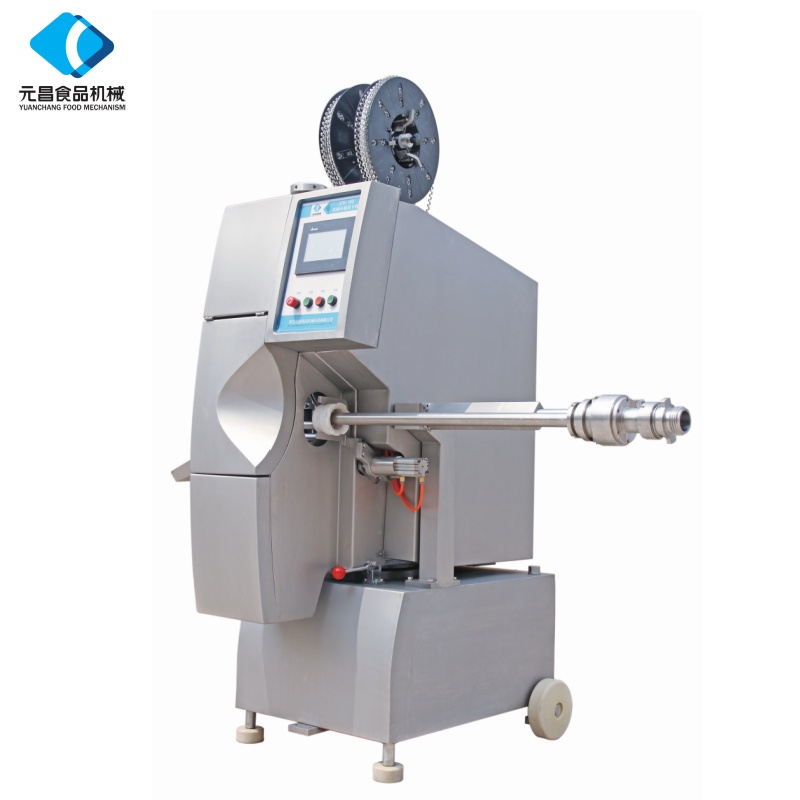
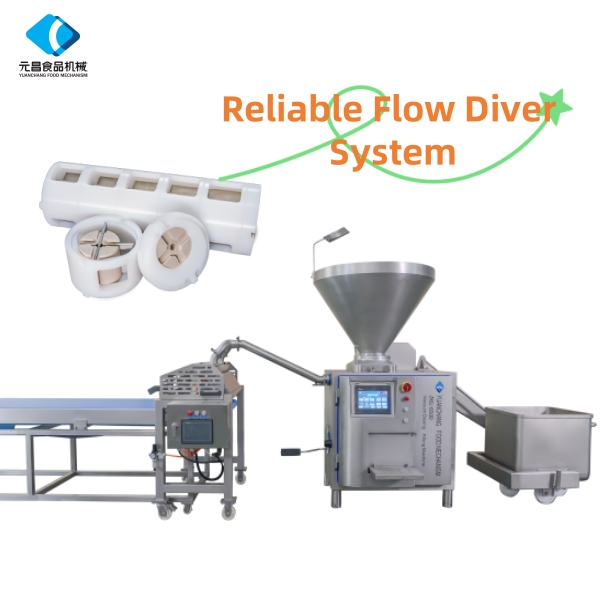
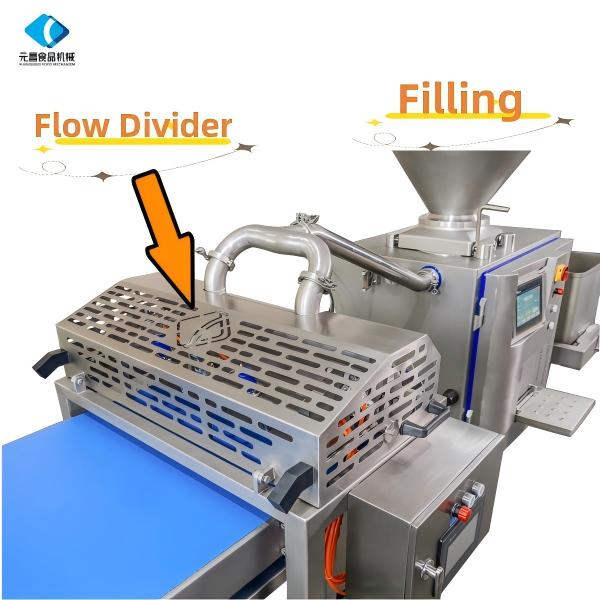
The Multi-lane Forming System is an automated negative-pressure extrusion forming device professionally used for processing casing-free moulded meat products. It is commonly used in conjunction with vacuum filling machines to form an integrated automated production line for filling, extrusion, and shaping. The equipment is suitable for minced meat, mixed granular fillings, and compound functional fillings. It can process and produce various casing-free meat products such as strips, sticks, slices, and irregular shapes, and is widely applied in processing industries including snack meat products, prepared convenience foods, low-temperature meat products, and pet food.
For decades, Hebei Yuanchang Food Machinery Technology Co., Ltd. has been deeply engaged in the manufacturing of meat processing equipment, profoundly participating in the iterative upgrading of domestic filling and forming technology from basic mechanised operations to precision automated systems. The enterprise continuously optimises the balance between equipment processing precision and mass production capacity. Relying on mature extrusion filling, pressure-stabilised feeding, and multi-lane synchronous extrusion forming technologies, it can stably produce both traditional sausage products and innovative new meat products, fully guaranteeing production efficiency, product appearance, and food safety compliance throughout the process. With continuous technological research and development and process accumulation, Yuanchang maintains solid technical R&D strength in the manufacturing of meat product filling and forming equipment.
III. Overall Equipment Overview
Multi-lane Synchronous Discharging for Higher Mass Production Efficiency
The equipment adopts a multi-lane synchronous parallel extrusion structure, ensuring uniform and stable filling delivery pressure, unified discharging speed, and neat, standardised forming appearance. The internal diversion structure has been professionally optimised to effectively reduce material conveying resistance, mitigate issues such as heating during filling transfer and fat separation, and fully preserve the original fibrous structure of the meat, ensuring a firm and delicate texture in the final product.
Quick Mould Switching for Flexible and Convenient Production
Featuring a modular quick-change mould design, forming moulds can be rapidly replaced according to production requirements, easily creating products of various shapes and specifications. The equipment boasts excellent compatibility, accommodating a variety of materials such as pure lean meat fillings, fat-and-lean mixed fillings, fillings with fruit and vegetable particles, pasta, and vegetables. One machine meets the production needs of multiple products, reducing equipment investment costs for enterprises.
Integration with Vacuum Filling Systems for Superior Product Quality
It achieves seamless linkage with vacuum filling machines, completing filling conveyance and extrusion forming within a vacuum negative-pressure environment. This thoroughly extracts air from inside the fillings, effectively preventing issues such as hollows, bubbles, and broken strips in the final products. The internal structure of the finished product is uniform and dense, with minimal weight deviation and strong batch consistency, meeting the quality requirements for high-end foods and export products.
Food-Grade Precision Engineering for Easy Cleaning and Maintenance
All parts of the machine that come into contact with materials are manufactured from food-contact-safe materials, featuring smooth and flat surfaces. The forming moulds, diversion cavities, and conveying pipelines can be quickly disassembled and separated, making daily rinsing, disinfection, and maintenance simple and convenient, thus conforming to food industry hygiene and production standards. The equipment's transmission structure is rationally laid out to isolate material contact, preventing cross-contamination issues from the source.
Intelligent Electronic Control Operation, Simple and User-Friendly
Equipped with an intelligent touch-control operating system, all production parameters are clear at a glance. Data such as extrusion speed, forming length, and production frequency can be freely adjusted. It supports the storage and retrieval of multiple sets of production recipes, enabling one-key switching of production categories. The equipment operates smoothly with low noise and a low failure rate, remaining stable and reliable even during prolonged continuous operation, thereby significantly reducing the operational difficulty for staff.
IV. Applicable Production Categories
● Snack Meat Products: Casing-free meat strips, High-Protein Meat Sticks & Meat Strips, sliced meat snacks, air-dried meat products, etc.
● Prepared Convenience Foods: Formed meat strips, hot pot ingredients, quick-meal formed meat materials, pasta, and catering-related products.
● Pet Food: Various pet meat strips, meat chunks, and pet nutritional supplements.
● Other Products: Various novel flavoured products relying on filling extrusion and shaping.
V. Professional Summary on Process Selection
A premium complete set of filling and forming equipment is a core enabler for enterprises to maximise the value of raw materials. The equipment must not only precisely control the filling volume and material distribution state but also flexibly adjust the forming operation mode according to different raw material characteristics—such as meat mince coarseness, fat content, and moisture ratio—to create the ideal product texture and consistency.
During the equipment selection process, in addition to valuing production efficiency, enterprises highly consider practical designs such as ease of cleaning, low failure rates, post-maintenance costs, as well as freshness preservation and anti-oxidation features. Looking ahead to the industry's future development, food processing equipment will continue to upgrade towards intelligence, modularisation, and flexibility to better accommodate the market's diversified and personalised product manufacturing demands.
VI. Technical Specifications
Specification Item | Details |
Model | FD- Synchronous row Quantity |
Used in conjunction with a filling machine | Yes |
Extrusion Lane | Up to 32 / Customizable |
Forming state | Customizable |
Cutting knife system | Customizable (based on different materials) |
Dual-filling / Co-extruded product | Customizable |